Weather-Driven Shifts in Betting Lines Span Multiple Outdoor Sports
Casey Koch · Nov 19, 2026
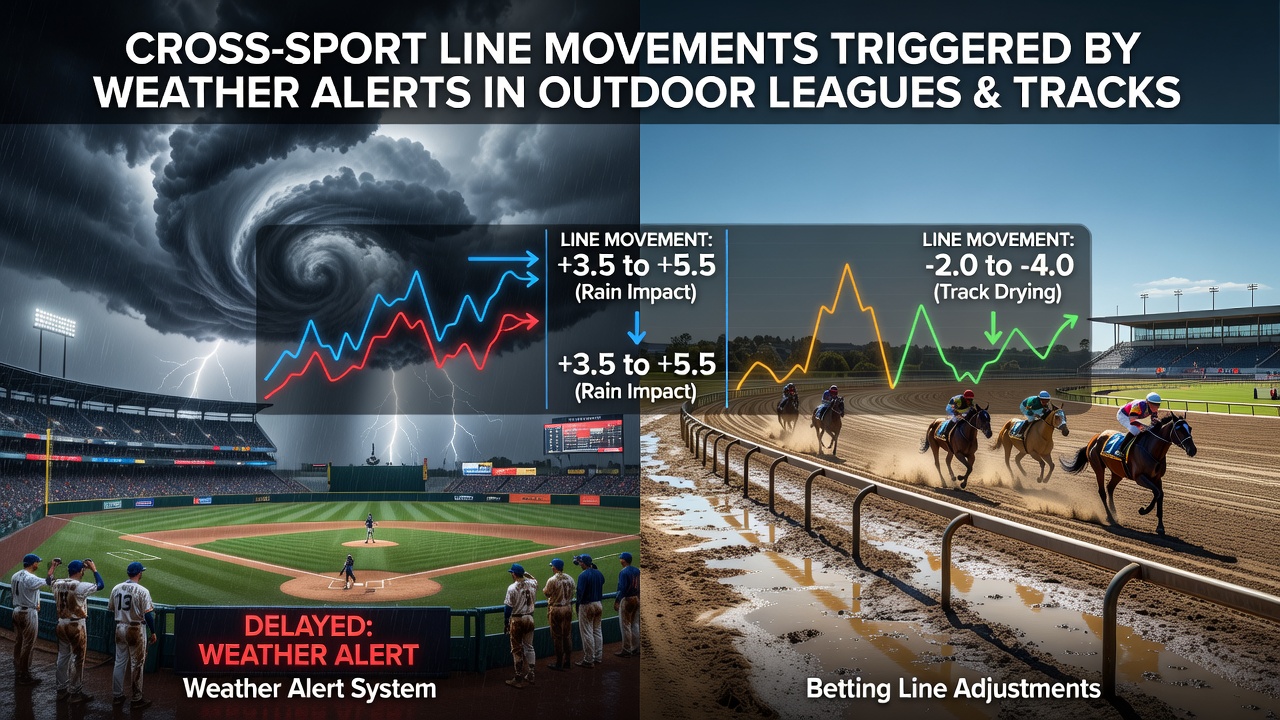
Weather-Driven Shifts in Betting Lines Span Multiple Outdoor Sports
Weather alerts trigger coordinated movements in betting lines across outdoor sports because sudden changes in conditions alter player performance metrics, game dynamics, and race outcomes in measurable ways, and bookmakers adjust odds accordingly when forecasts update. Observers note that rain, wind, or extreme temperatures often force rapid recalibrations in markets for soccer matches, horse races, tennis tournaments, and other events held on open fields or tracks, while indoor sports remain largely unaffected.
Data compiled from multiple European and North American leagues shows that wind speeds exceeding 30 kilometers per hour frequently depress scoring rates in soccer by up to 15 percent, prompting bookmakers to lower totals lines within minutes of severe weather bulletins. Similar patterns appear in thoroughbred racing where track surfaces soften under heavy precipitation, shifting win probabilities toward horses with proven mud-running form, and those adjustments ripple into related markets such as place payouts and exacta combinations.
Cross-Sport Patterns in Line Adjustments
Researchers tracking odds across platforms have documented instances where a single weather system affects several sports simultaneously, creating parallel drifts in different betting categories. A storm front passing through a region might delay tennis matches on outdoor courts, alter basketball games played in open-air venues during exhibition periods, and slow horse racing times at nearby tracks all within the same afternoon. These overlapping impacts lead to synchronized line movements as operators monitor real-time meteorological data and update prices to reflect revised probabilities.
Studies from meteorological agencies indicate that temperature drops below certain thresholds correlate with reduced serve speeds in tennis and increased error rates in field events, factors that directly influence over-under totals and player-specific props. In horse racing, jockeys and trainers respond to wind warnings by altering strategies, and those tactical shifts appear in the odds as public money follows updated form assessments. Bookmakers integrate feeds from national weather services to automate parts of this process, ensuring lines reflect conditions before markets open or during live betting windows.
Regional Examples and Data Trends
One documented case from November 2026 involved a series of Atlantic storms that swept across parts of the UK and Ireland, causing measurable drifts in soccer totals markets for matches in exposed stadiums while simultaneously softening turf at several racecourses. Lines on match goals moved downward as forecasts confirmed sustained rainfall, and racing odds adjusted to favor stamina-oriented runners. Observers recorded similar effects in Australian summer tennis events where heat warnings prompted schedule changes that influenced set totals and player performance props.
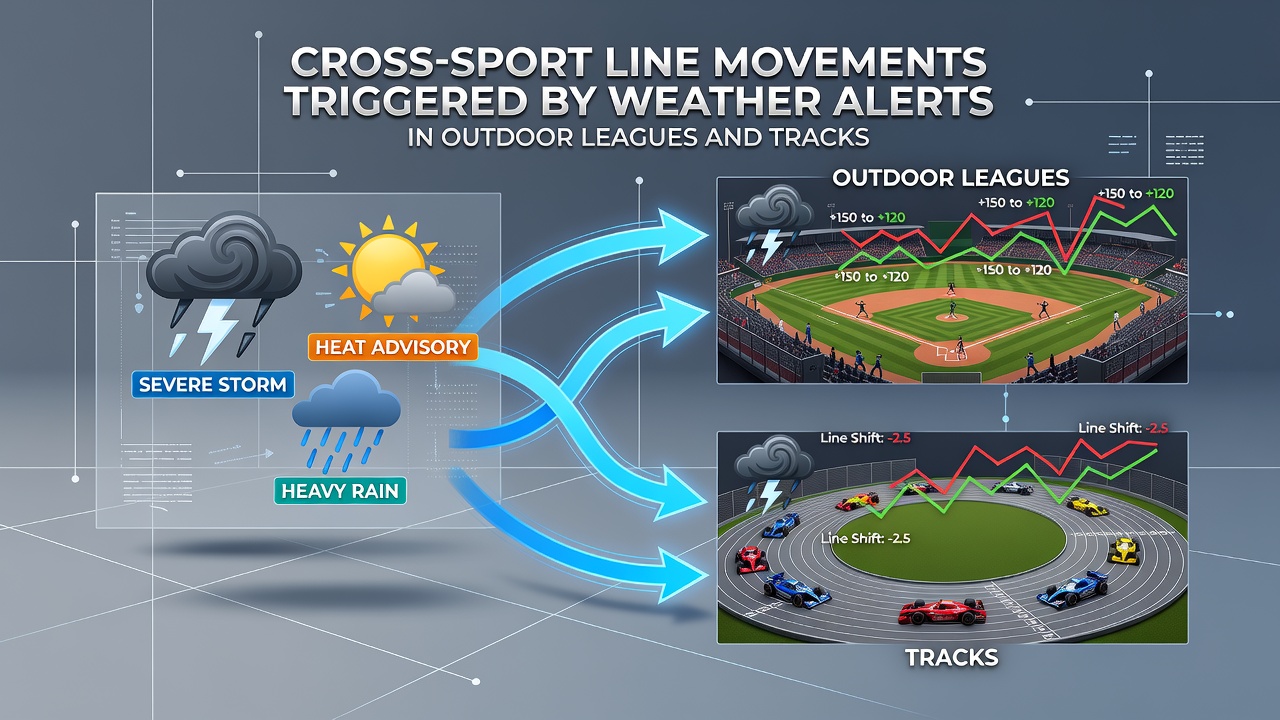
Industry reports from the American Gaming Association highlight how operators in regions prone to hurricanes and thunderstorms maintain dedicated teams to monitor alerts from sources such as the National Oceanic and Atmospheric Administration. When warnings extend to outdoor venues, betting volumes often shift toward live markets where odds can be recalibrated more frequently. Canadian regulatory data further shows that winter storm alerts in provinces hosting outdoor speed skating or equestrian events produce comparable line volatility, with totals and handicap markets reacting within tight timeframes.
Academic analyses of historical betting data reveal that the speed of line movement depends on the sport's sensitivity to surface conditions and the availability of reliable weather modeling. Soccer markets tend to adjust more gradually because team lineups remain fixed, whereas horse racing lines can shift sharply once official going reports update. Tennis markets occupy an intermediate position because match scheduling flexibility allows some adaptation before play begins, yet sudden wind gusts still force in-play corrections.
Mechanisms Behind Coordinated Movements
Bookmakers rely on algorithmic models that incorporate weather variables alongside traditional statistical inputs, and when alerts escalate to higher severity levels the models output revised probability distributions that translate directly into odds changes. These updates propagate across connected markets because many operators use shared risk-management platforms. A wind alert affecting one soccer fixture may prompt review of correlated tennis or racing events in the same geographic cluster, producing the cross-sport movements that define this phenomenon.
Regulatory bodies in Australia and the European Union require transparent reporting of how external factors such as weather influence pricing, which has encouraged development of standardized protocols for incorporating meteorological inputs. Those protocols help maintain market integrity while allowing rapid response to verified alerts. Data from university-led research projects demonstrates that markets incorporating real-time weather feeds exhibit lower variance in closing prices compared with those relying on static forecasts.
Conclusion
Weather alerts continue to drive measurable adjustments in betting lines across outdoor sports because they alter core performance variables in ways that bookmakers must reflect to balance risk. Patterns observed in November 2026 and earlier periods confirm that coordinated movements occur most visibly when multiple events share similar exposure to the same meteorological system. Observers tracking these dynamics find that integration of official weather data into pricing models remains the primary mechanism ensuring lines stay aligned with evolving conditions across soccer pitches, racing tracks, and tennis courts.