Packed Fixtures, Shifting Lines: The Hidden Links Between Calendar Pressure and Odds in Four Sports
Mia Werner · Aug 17, 2026
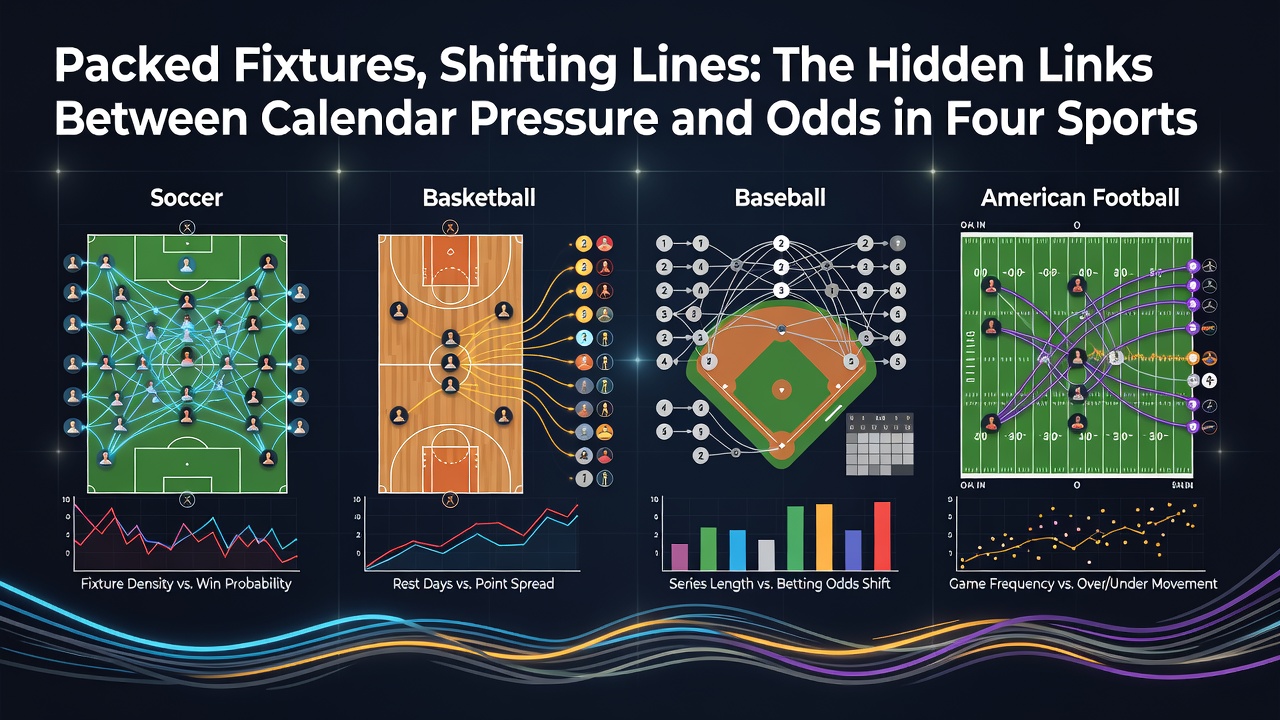
Packed Fixtures, Shifting Lines: The Hidden Links Between Calendar Pressure and Odds in Four Sports
Calendar pressure builds when multiple high-stakes events cluster within short windows, and bookmakers adjust lines across football, horse racing, tennis and basketball to reflect the resulting fatigue and recovery patterns. Data from league schedules show that teams and athletes facing consecutive matches often see their odds lengthen or shorten based on documented rest differentials rather than form alone.
Fixture Density and Performance Metrics
Football leagues in Europe record fixture congestion peaks during winter months and European competition weeks, where clubs play three matches in eight days. Studies tracking player distance covered and sprint counts indicate measurable drops in output after such clusters, which markets incorporate through adjusted totals and handicap lines. In August 2026 pre-season windows, several top divisions already list overlapping domestic cups and continental qualifiers that force early squad rotation decisions.
Horse racing calendars pack graded stakes into festival periods, with trainers shipping runners across continents for consecutive weekends. Performance databases maintained by racing authorities reveal that horses with less than fourteen days between starts post lower win percentages in elite company, prompting odds compilers to widen morning lines on repeat runners. Trainers publish official work schedules that markets monitor to anticipate these shifts.
Travel and Recovery Patterns in Individual Sports
Tennis players navigate the ATP and WTA calendars that place hard-court swings immediately after clay-court majors, creating back-to-back weeks with minimal recovery. Match statistics from the International Tennis Federation demonstrate that five-set matches followed by transcontinental flights correlate with elevated unforced error rates in early rounds of the next event. Bookmakers therefore shade set and game totals when draw sheets confirm short turnaround times between tournaments.
Basketball schedules in both NBA and EuroLeague feature back-to-back nights and four-games-in-five-days stretches during the regular season. League tracking data released by the NBA show average points per possession decline on the second night of back-to-backs, particularly for teams that traveled across time zones. Oddsmakers respond by moving totals and player prop lines when official rest reports confirm the pattern.
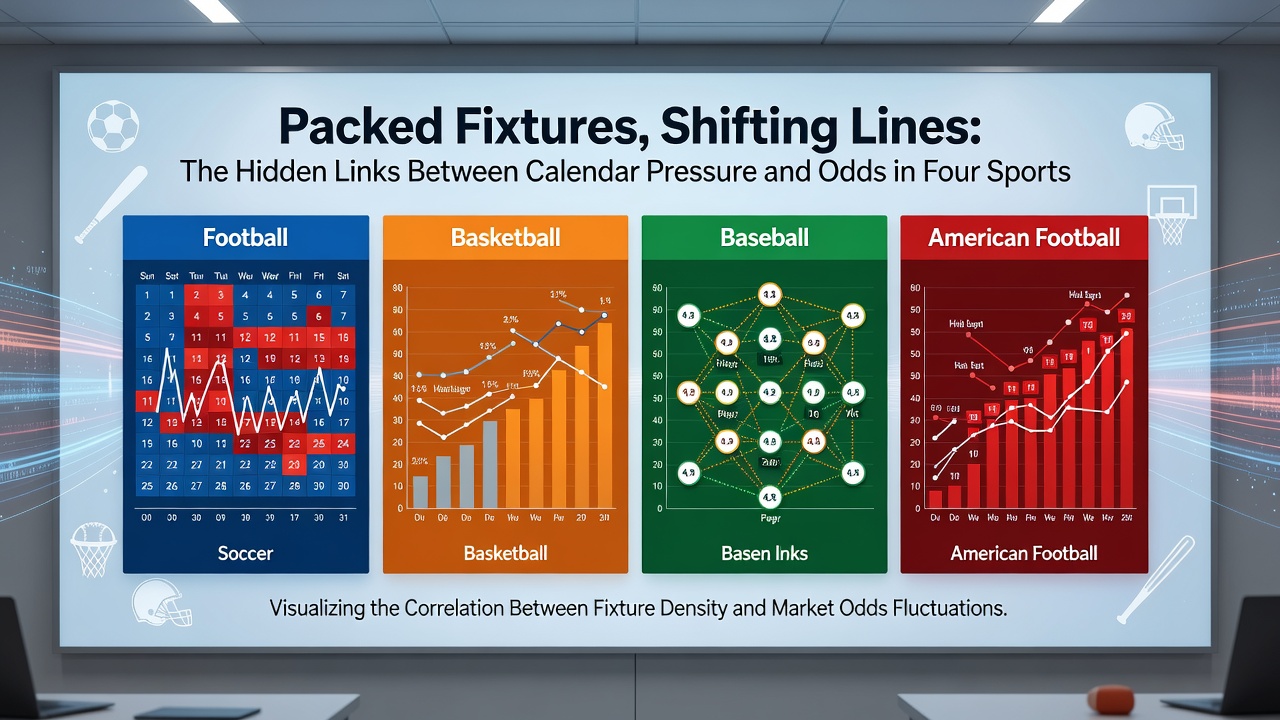
Market Mechanisms and Line Movement
Bookmakers integrate scheduling databases directly into their pricing models. When a football side plays midweek in Europe then travels for a domestic league fixture, the away side’s handicap often tightens because historical results indicate lower scoring outputs. Similar adjustments appear in horse racing where official entries list horses running on short rest, causing place markets to reflect teh statistical underperformance recorded by racing commissions in multiple jurisdictions.
Tennis betting markets move sharply once qualifying draw sheets confirm main-draw players must contest three matches in four days. Game-total lines shift because point-by-point data collected by tournament statisticians show serve percentages drop under accumulated fatigue. Basketball quarter totals receive parallel treatment when injury reports and rest lists confirm starters will sit the second night of a back-to-back, altering expected scoring distributions.
Data Sources Informing Adjustments
Research published by the Australian Institute of Sport tracks multi-sport athlete recovery timelines and supplies benchmarks that several international bookmakers reference when setting lines for tennis and basketball events held on the same continent. European sports medicine journals release longitudinal studies on football fixture lists that quantify injury risk after congested periods, information reflected in handicap and totals pricing. North American league offices publish rest and travel reports that directly feed into basketball and horse racing oddsmaking processes.
Conclusion
Calendar pressure creates measurable performance variances across football, horse racing, tennis and basketball, and these variances translate into observable shifts in betting lines. Scheduling databases, recovery studies and official rest reports supply the factual inputs that markets use to recalibrate odds when fixtures cluster. Observers tracking August 2026 schedules can map upcoming congestion points to anticipated line movements by following the same performance metrics that inform pricing decisions.