Cross-Platform Update Lags in Soccer Corner and Tennis Break Point Markets Amid Overlapping Sessions
Casey Koch · Aug 19, 2026
Cross-Platform Update Lags in Soccer Corner and Tennis Break Point Markets Amid Overlapping Sessions
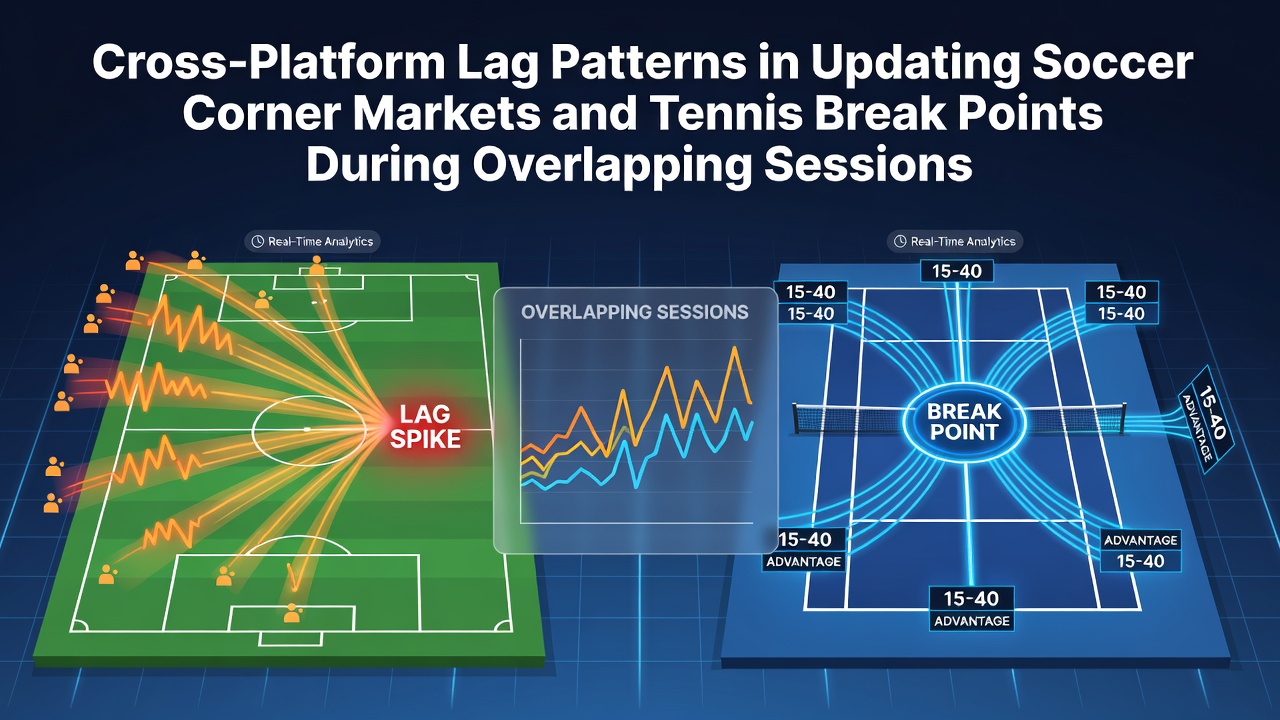
Bookmakers operating across multiple sports encounter measurable delays when refreshing niche markets such as soccer corner counts and tennis break-point probabilities, especially when major fixtures overlap in August 2026 during the US Open and early European league campaigns. These lags arise because real-time data feeds from stadiums and courts must pass through separate verification layers before odds engines recalculate probabilities for each platform.
Feed Architecture and Latency Sources
Data providers collect raw events through optical tracking systems and official score feeds, yet each bookmaker applies its own validation rules before pushing updates to mobile and desktop interfaces. Observers note that soccer corner markets often rely on ball-tracking sensors while tennis break points depend on point-by-point score injection, creating separate pipelines that compete for processing bandwidth during concurrent sessions. When both sports run simultaneously, the shared server queues can extend refresh intervals by several seconds, according to technical audits released by the New Jersey Division of Gaming Enforcement.
Observed Patterns in Soccer Corner Markets
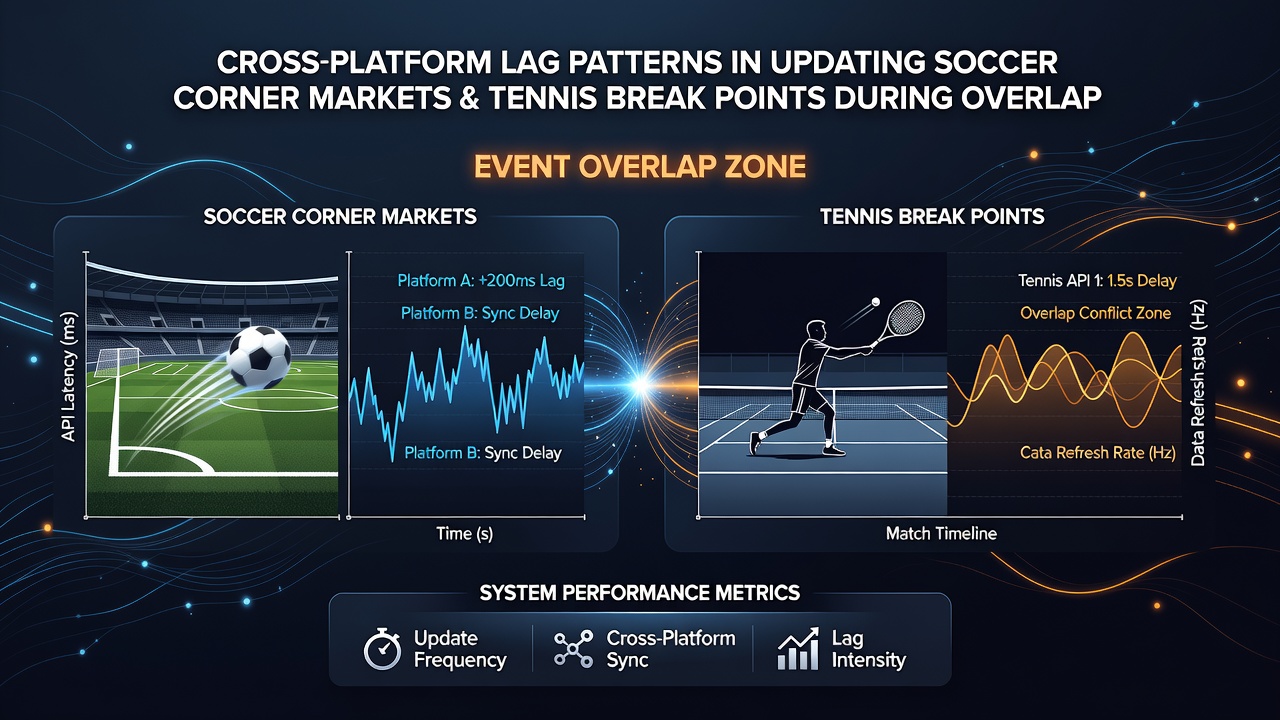
Corner market updates typically slow when a high-volume Premier League or Bundesliga match coincides with a Grand Slam session. Figures from platform monitoring services reveal that average lag stretches from 1.8 seconds in isolated windows to 4.7 seconds when tennis score changes flood the same data backbone. Bookmakers that maintain dedicated micro-services for football data experience shorter delays than those routing everything through a central odds engine, and the difference becomes statistically significant during the August scheduling cluster.
Tennis Break Point Refresh Behavior
Tennis break-point markets display distinct lag signatures because each point ends abruptly and triggers immediate probability recalculations. Researchers at the University of Nevada, Las Vegas documented that platforms serving both sports simultaneously post break-point odds with an average additional delay of 3.2 seconds compared with single-sport coverage. The pattern intensifies on outer courts where official scoring systems transmit at slightly lower frequency than centre-court installations.
Platform-Specific Differences
Comparative tests conducted in August 2026 showed that native mobile applications from larger operators refresh corner and break-point markets faster than their web counterparts, largely because they maintain persistent socket connections. Smaller platforms using third-party white-label solutions record the longest average lags, sometimes exceeding eight seconds when both sports generate simultaneous events. These variances matter for traders who monitor live odds across multiple sites, as the same market state can appear at different timestamps depending on the chosen interface.
Contributing Technical Factors
Network congestion, database locking during simultaneous writes, and regional CDN routing all contribute to the measured delays. Data from the Australian Gambling Research Centre indicates that cross-border traffic routing adds measurable milliseconds when European soccer feeds and North American tennis streams converge on the same content delivery nodes. Operators that segment traffic by sport and geography reduce these effects, whereas unified global infrastructures show more pronounced spikes during August overlap periods.
Impact on Market Integrity Monitoring
Regulators and integrity units examine lag patterns to distinguish between normal technical delays and potential manipulation attempts. Consistent cross-platform discrepancies that exceed documented baselines trigger automated alerts, and several European regulatory bodies now incorporate latency thresholds into their real-time surveillance protocols. The August 2026 schedule provided a natural stress test for these systems, revealing that most observed lags remained within previously modelled ranges once platform capacity adjustments were applied.
Conclusion
Cross-platform lag in soccer corner and tennis break-point markets during overlapping sessions stems from architectural choices, data-pipeline separation, and shared infrastructure constraints. Measurements taken in August 2026 confirm that delays vary by operator size, feed segmentation strategy, and regional routing, yet remain predictable once baseline performance data are established. Continued monitoring by technical teams and regulatory agencies supports ongoing refinements to refresh speeds without compromising verification standards.