App Algorithms and Live Market Adjustments in Soccer Intervals, Tennis Deciders, and Race Photo Finishes
Quinn Koch · Nov 5, 2026
App Algorithms and Live Market Adjustments in Soccer Intervals, Tennis Deciders, and Race Photo Finishes
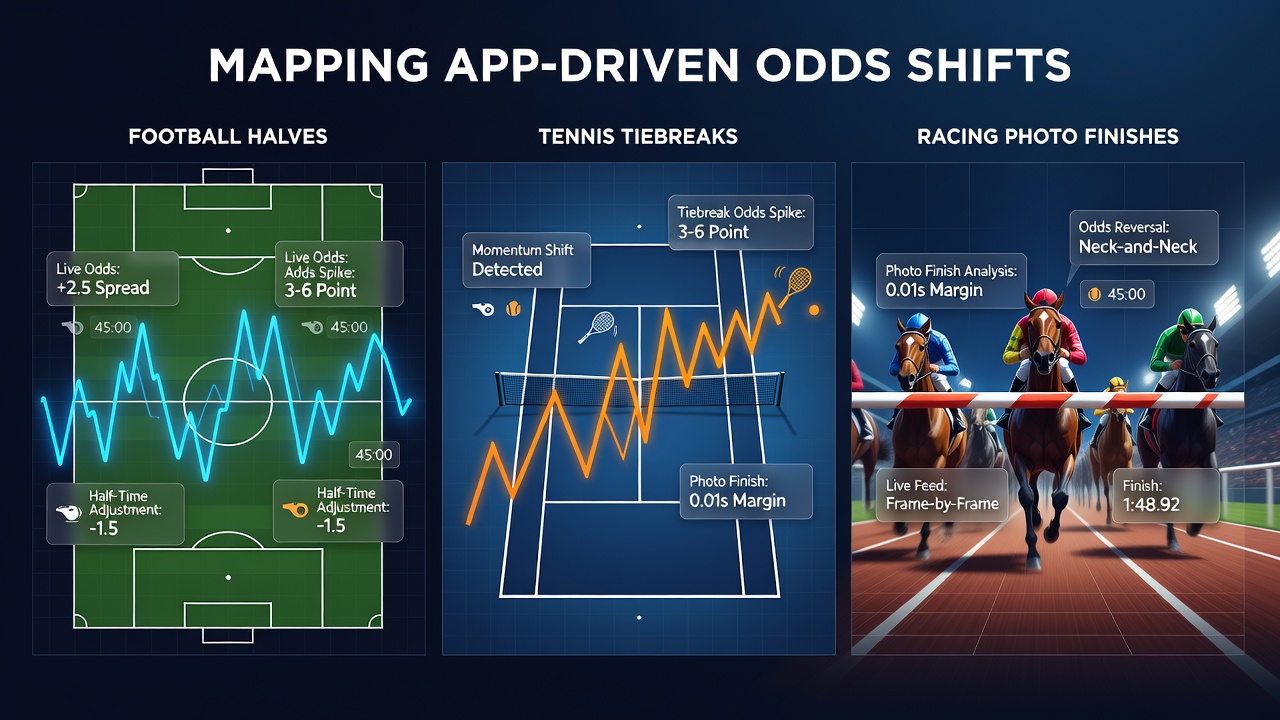
Betting platforms rely on mobile applications to process incoming data streams and adjust odds across multiple sports within seconds of key events, and observers note that these adjustments appear most pronounced during football half-time intervals, tennis tie-break sequences, and racing photo finishes.
Platform Data Flows During Football Halves
Applications collect live statistics from stadium feeds and broadcast sources, then recalculate probabilities for remaining match segments once the first half concludes; researchers have documented how these recalculations shift totals and handicap lines before the second half begins, with updates often completing inside a 90-second window.
Operators integrate goal timing data, possession percentages, and substitution notifications into their models, while algorithms compare pre-match expectations against observed outcomes to generate revised prices for the next 45 minutes of play. Studies from European sports analytics groups show that second-half goal lines can move by 0.25 to 0.75 goals within the first two minutes after the interval whistle.
Tennis Tie-Break Adjustments
During tie-breaks, applications track point-by-point scoring and server statistics to revise game and set prices in real time; data indicates that odds for individual points inside a tie-break can change after every rally once the score reaches 6-6 in a set. Industry reports compiled by North American gaming research centers reveal that tie-break win probabilities update at intervals as short as 15 seconds when momentum indicators shift.
Bookmakers incorporate historical performance metrics on tie-break servers and receivers, then push revised lines to user devices through push notifications, and this process creates visible price gaps between platforms that refresh their feeds at different speeds. One analysis of Grand Slam matches played in 2025 found that average tie-break odds moved 18 percent more frequently on mobile applications than on desktop interfaces during the same events.
Racing Photo-Finish Updates
Photo-finish technology feeds results into betting systems within seconds of the horses crossing the line, and applications then adjust place and each-way payouts while stewards review the image; regulatory filings from Australian state authorities document that stewards typically confirm results in under 90 seconds, during which time live odds for related exotic bets continue to fluctuate.
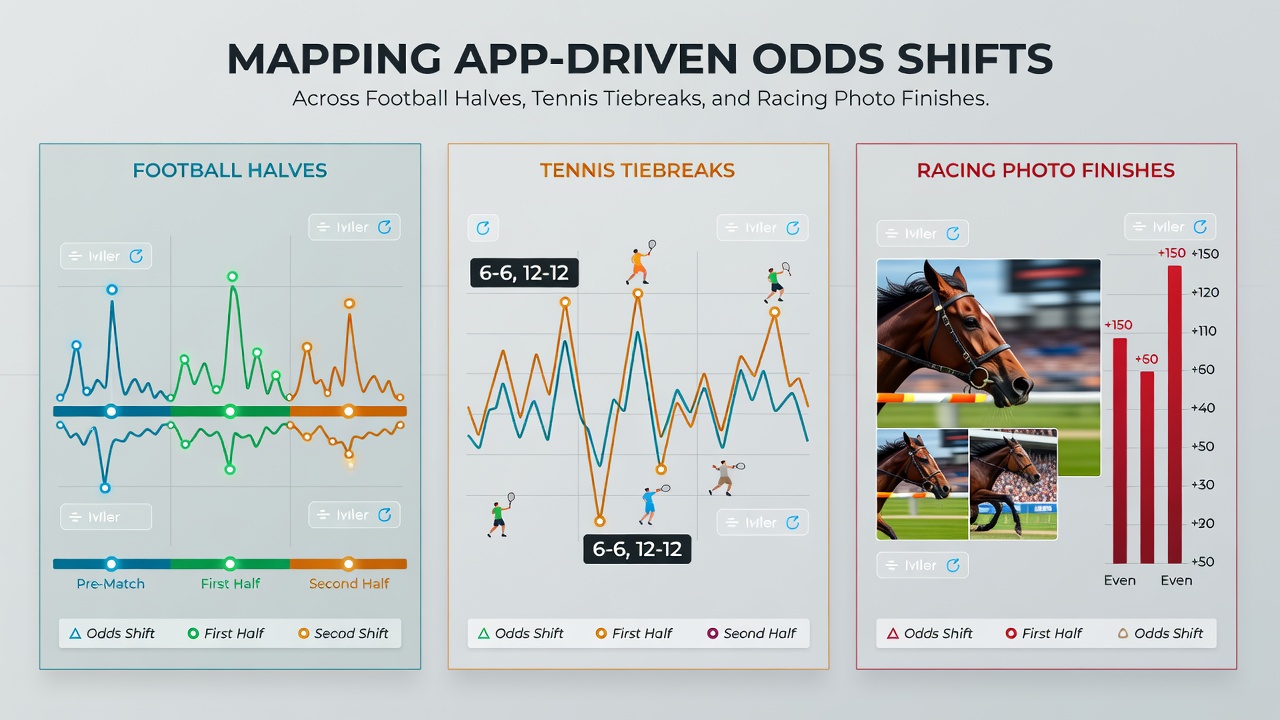
Systems compare the official result against pre-finish market expectations and recalibrate dividends for quinellas, trifectas, and forecasts accordingly; figures released by Canadian provincial regulators in late 2026 indicate that photo-finish delays account for roughly 12 percent of all post-race odds revisions across major thoroughbred meetings.
Mapping Shifts Across Platforms
Analysts use timestamped data from multiple bookmakers to track how quickly each application reflects new information, and comparisons show that some platforms update football half-time lines faster than others while tennis tie-break adjustments follow a different latency pattern. Software tools aggregate these timestamps into visual maps that highlight which operators lead or lag during specific event types.
November 2026 data collected from major European and North American fixtures demonstrate that the average delay between an event trigger and visible odds movement ranges from 8 seconds in racing to 22 seconds in tennis tie-breaks, with football half-time updates falling in the middle at 14 seconds. Observers attribute these differences to the complexity of the underlying statistical models and the volume of concurrent bets being processed.
Developers continue to refine machine-learning components that predict teh direction of likely shifts before official confirmation arrives, and early tests conducted by university research teams suggest these predictive layers can reduce user exposure to stale prices by 30 percent during high-volatility moments. External links to detailed methodology appear in reports published by the Victorian Responsible Gambling Foundation and the New Jersey Division of Gaming Enforcement.
Conclusion
Applications now serve as the primary conduit for real-time odds information across football halves, tennis tie-breaks, and racing photo finishes, and the speed and accuracy of these updates depend on integrated data pipelines, algorithmic sophistication, and regulatory oversight in each jurisdiction. Continued monitoring of these systems provides measurable insight into how market prices evolve during the most decisive moments of each sport.